Land Business Update | Week Commencing 31 August 2026
Farming & food
SFI26 Window 1 now closed and Window 2 opening on 22 September (England)
The window for smaller farms and applicants without an existing agreement has now closed. The unspent Window 1 funding will be added to the Window 2 budget, which is now £290m. Defra has published some interesting data on the profile of applicants in Window 1. There were around 6,500 applications and almost 90% were for farms without an existing ELM revenue agreement, so this is a positive sign that more ‘bare’ land is going into agri-environment schemes. Almost 70% of applications were for farms of less than 50 hectares, so again a good sign that the schemes are now starting to reach the whole range of farms. The applicants will receive an average payment of just under £10,000 a year, so, based on the maximum size of farm that could apply, this is equivalent to £200+/ha, so a little below the ‘old’ Basic Payment rate. The five most popular actions are (we are not sure whether this is by frequency or area covered):
Herbal leys (CSAM3) – this is a positive sign in terms is increasing the resilience of farms to floods and droughts. Lots of photos and stories have been circulating about how leys have remained green and nutritious when shallower rooting ryegrass fields have burned off this summer.
Manage grassland with very low nutrient inputs (CLIG3) – we think this is positive as it supports (more) sustainable agricultural production, as well as being better for nature, soil health and water quality.
Haymaking supplement (GRH7) – this is positive as well over 90% of hay meadows have been destroyed (often euphemistically called ‘lost’) and it, again, supports (more) sustainable agricultural production.
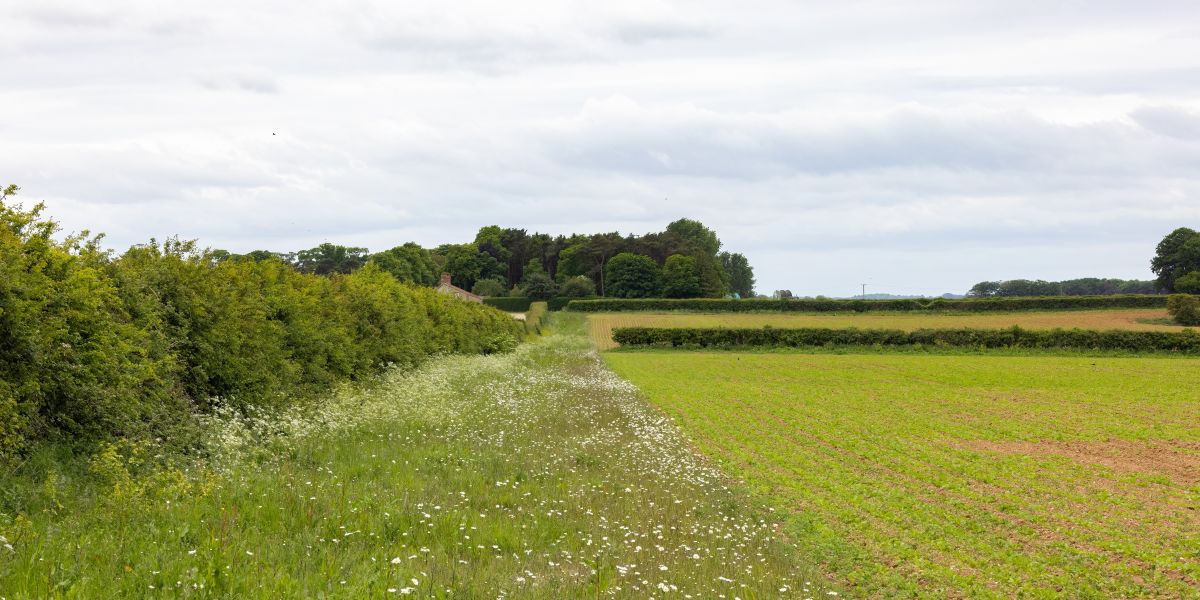
Manage hedgerows (CHRW2) – well managed hedgerows provide the network or structure for nature on many farms so it is good to see them being managed positively. See the article on Ireland’s National Hedgerow Week below.
Manage ponds (WBD1) – the same applies to ponds. Lots have been filled in and well managed ponds provide a different type of habitat for many plants and animals.
Defra also provided some data on the processing of applications, with the average being 24 days from application to an agreement offer being made.
There are likely to be thousands of applications made as soon as Window 2 opens, so our strong advice is to prepare in advance, including checking that all land parcels are shown correctly on your / the RPA’s digital maps and to submit an application as soon as the window opens. The RPA has been stress testing its systems for large numbers of applications arriving at the same time. If you would like any assistance with an application, please contact your local farming team or Natalie Gaibani, our head of farming. NB Agreement offers need to be accepted within 30 calendar days or they will be withdrawn.
Natural capital & environment
National Hedgerow Week 2026 in Ireland (UK)
To celebrate hedges, which I love, the Heritage Council and Teagasc have published a series of interesting non-technical short articles on hedges, which are equally as relevant across the United Kingdom. They include:
Hedgerows – a lifeline for birds and insects
Maintaining and improving water quality and mitigating climate change – the role of hedgerows
Hedgerows and our heritage
Shade and shelter – an understated benefit of hedgerows
Hedgerows: ‘Commuter corridors’ for wildlife
One article says, “It doesn’t take much to make a hedge even better for wildlife. Allowing some to flower and produce berries, leaving an unsprayed grassy margin at their base and retaining the occasional mature tree all add to their value. Cutting hedges on a rotation, rather than every year, encourages more flowers and fruit while creating a mix of hedge ages and structures across the farm. For nature, hedges are one of the richest and hardest-working habitats in the landscape.”
Sweet chestnut blight restrictions extended in the south west (England)
The demarcated area has been extended in Devon and into a small part of Cornwall, following further findings near the current boundary by the Forestry Commission. The restrictions are on the movement of sweet chestnut trees and other susceptible material. Land managers are urged to remain vigilant and report suspected cases through TreeAlert.
Risk of water infrastructure failure upgraded from minor to catastrophic by latest national risk register (UK)
The Times has reported that the updated national risk register, released in July, says that there is now a 5 – 25% chance of failure of water infrastructure which would result in the loss of drinking water and impact wastewater services for over one million people. Such an outage would require evacuation of residents, the closure of schools and hospitals and could take months to repair. The consequences of such an event are categorised as ‘catastrophic’, a significant upgrade from the previous assessment of there only being a tiny chance (0.2 – 1%) of collapse and that it would have a ‘minor impact’, the lowest rating. Despite recent rainfall, above average rain is needed for at least six months to replenish reservoirs.
Forestry Commission temporarily stops access to some woods due to the risk of people accidentally starting wildfires (England)
The Commission is reported as considering greater routine use of firebreaks and the restoration of reservoirs and lakes in woodlands.
Rural economy & property
The new National Planning Policy Framework (NPPF) – our first impressions (England)
The new NPPF represents the most significant and positive rewrite of national policy since the introduction of its predecessor in 2012. It is not necessarily a substantive shift in policy (that came in the NPPF 2024), but a new policy-based framework, divided into plan-making and decision-taking policies. Much of what was in the consultation draft remains. The main thing it does is strengthen policies for the delivery of new homes and economic growth, in rural and urban settings. Some of the main points are:
The presumption in favour of sustainable development. These policies provide a default ‘yes’ within settlement boundaries and within ‘reasonable walking distance’ of ‘well-connected stations’. It also says that there are specific forms of development that should be approved outside settlement boundaries, unless the benefits of doing so would be substantially outweighed by the adverse effects (policy S5). This includes development for agriculture, horticulture and forestry, rural businesses and services, the reuse, extension, alteration or replacement of existing buildings, the redevelopment of previously developed land, limited infilling within groups of housing and rural exception sites.
Vision and strategy to encourage economic growth. The NPPF now specifically addresses the delivery of ‘strategic sites’, which are defined as sites of more than 1,500 new homes. It also includes the need for Local Plans to provide a diverse mix of housing sites (from less than 1 ha to 1-2.5ha to the bigger ones).
Green Belt. This approach is largely unchanged, including the introduction of grey belt and the application of the Golden Rules, but there is a new category of not ‘inappropriate development’, which is residential or mixed-use development within reasonable walking distance of a well-connected station.
The return to strategic planning. As expected, there is more clarity on the role and purpose of Spatial Development Strategies, which will set the vision and strategy for growth and change at the sub-regional level (over a period of at least 25 yrs).
We have published a fuller blog on the NPPF here and, if you would like to discuss the opportunities it may open up, contact Katie Lamb, our head of planning.
Biodiversity Net Gain (BNG) to apply to NSIPs from 2nd November (England)
When BNG becomes mandatory for Nationally Significant Infrastructure Projects (NSIPs) from 2nd November, developers applying for a Development Consent Order must deliver at least a 10% net gain in biodiversity, so in-line with current BNG regulations. Like current BNG policy, there are three primary routes to achieving the 10% target:
On-site gains – by enhancing or creating habitats within the project boundary.
Off-site gains – by creating habitats on owned land or purchasing units from the private market.
Buying statutory credits – which is a last-resort option due to the higher cost of these units.
The introduction of BNG for NSIPs is expected to have a positive impact on the market due to the increase in demand for units. If you would like to discuss BNG or wider natural capital markets, please contact Gwilym Jenkins, our head of natural capital in England.
Record installations of solar panels and batteries in first half of 2026 (UK)
Over 142,000 solar installations were made in H1 2026, more than the previous record in 2025 (although more were installed in H2 2011 when the first large-scale solar farm was built in Cornwall). Most of the new installations are on household roofs, which account for around a third of solar capacity. Battery storage installations have also risen sharply, almost doubling compared with H1 2025, with 36,000 MCS certified installations in H1 2026. The reasons for the increase are the current 0% VAT rate on residential solar and battery storage which runs until 31st March 2027 (and is scheduled to revert to 5% after) and more installations with batteries, as households try to reduce their energy costs. Octopus Energy, the biggest energy supplier in GB, said that sales of solar panels increased by more than 50% in March after the start of the US/Israel-Iran war which caused oil and gas prices to rise significantly. Many people are also expected to install plug-in or balcony solar panels now they are permitted. Applications for the Boiler Upgrade Scheme was 4,512 in June, up 21% compared with June 2025. NB Grants were available for agricultural solar in England under the Improving Farm Productivity grant (round 2), covering about 25% of eligible costs, but the scheme is currently closed. If you would like to discuss solar, wind or renewable energy, please contact Nick Bramley.
New style EPCs and MEES delayed (Scotland)
The introduction of new style EPCs has been delayed until 30th April 2028, from 31st October this year, due to delays by the UK government is introducing the new methodology that will be used. Once introduced, the new style will include a Heat Retention Rating (HRR), showing how well insulated the property is, and will be valid for five years (rather than 10 years as at present). A new style EPC will be required for new lettings, although there is a one year transition period to 30th April 2029 during which an old style EPC can be used for the first new let, as long as the certificate is less than 10 years old. The delay in the methodology has also meant that the new Minimum Energy Efficiency Standards (MEES), which were due to commence from 1st April 2028, have also been delayed.