Land Business Update | Week Commencing 14 September 2026
Farming & food
Sustainable Farming Incentive 2026 (SFI26) Window 2 opens on 22 September (England)
Demand is expected to be exceptionally high for this so be ready to submit an application as soon as possible as they will be determined on a first-come-first-served basis. Please call our farming team if you would like any assistance.
Strutt & Parker’s twice-yearly farm and estate staff wage review letter (UK)
Since the abolition of the Agricultural Wages Board in 2013, we have analysed what we consider to be fair review rates for wages for farm and estate workers. We have updated the letter for clients with our recommendations on annual wage reviews for their farm and estate staff from September 2026. Our recommendation is based on a range of evidence and on the levels which we assessed as being appropriate at previous reviews. Private sector wages and the National Living Wage continue to increase, although at a slower rate than in 2023 and 2024. Please contact your local office if you would like to discuss staff wages.
£2m drought support from RABI for farming households (England, Wales)
Grants of up to £2,000 per household will be available from RABI towards personal and household costs. The grants cannot be used for farm or business running costs. The grant is operating on a regional basis, with the South East open for applications from 21st September and the East opening on 28th September and the Midlands opening on 5th October. The grants will close once each regional allocation has been committed.
Keeping farmed landscapes connected for bats (UK)
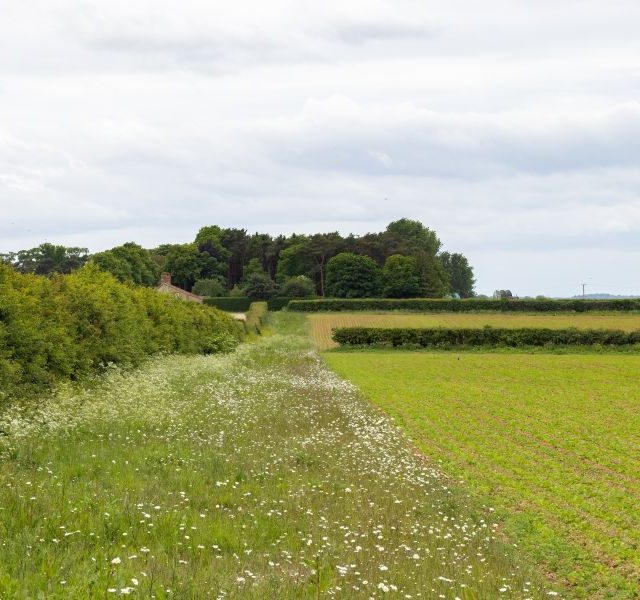
Bats rely on hedgerows, woodland edges, watercourses and other connected habitats to move safely between roosts and feeding areas. When planning building works or installing lighting, consider these flight routes: retain connecting features and avoid lighting them wherever possible. Protecting dark, connected corridors is a simple way to support bats on farmland. For more information, visit Bat Conservation Trust Agriculture or email farming@bats.org.uk.
Natural capital & environment
UK woodland and peatland carbon prices increased in 2025 (UK)
The average sold price reported for Woodland Carbon Code units, which are almost entirely Pending Issuance Units or PIUs, increased to £28.32 in 2025, up 5% from £26.85 in 2024. The range of prices also increased, with an astonishing spread of £112 between the lowest and highest price, compared with £62 last year. The number of units sold dropped to 174,000, which is the lowest in the past six years. For Peatland Code units, the average price reported increased to £39.57 in 2025, up by over 50% from £25.04 in 2024, with a range spread of £75 (it was £7.50 in 2024). Again, almost all of the units were PIUs. Although the carbon code teams make a significant effort to collect data on sales prices and for the market to be transparent, this data, collected by Ecosystem Marketplace, is based on a small number of respondents and projects.
Lewes in East Sussex becomes the first town in the country to recognise the rights of trees (England)
The rights also cover hedgerows, woodlands and forests. The purpose of the campaign is to inspire people and offer trees better protection.
Warning that we need a more resilient UK food system (UK)
Neil Ward, professor of rural and regional development at the University of East Anglia, has written a striking article for the Green Alliance. In it he says that, “for many people alive today, summers like 2026 may be remembered not as extreme, but as among the coolest they will experience in their lifetimes”. He continues that the drought of 2026 should not be remembered simply as a bad summer for farming but as the moment we recognised that resilience must become the organising principle of UK food policy. “If we act now, the mid-2020s could be seen not as the start of a crisis, but as the beginning of a more secure, healthier and more resilient food system”. Professor Ward led the production of a report, Roadmap for resilience: a UK food plan for 2050, for the AFN Network+. It called for three core transformations to our food system: build resilience in how our food is produced; a smarter and more integrated approach to land use; and making healthier diets more accessible and affordable. It is well worth reading and Prof Ward now is now involved in the follow-up organisation, Root + Reason, a food resilience collective, which promotes this approach to transformational change.
Rural economy & property
Residential lettings – ‘Register your rental property’ service (England)
As part of the Renters’ Rights Act reforms, all landlords will be legally required to join the ‘register your rental property’ service. The idea is that this will give renters more confidence that a landlord is genuine and following the rules. The register will initially only apply to properties that are let to a tenant, but unoccupied rental properties will be added to it in the future. The service will launch on 15th December 2026 with the following three-month regional registration windows:
- West Midlands (15th December 2027 – 15th March 2027)
- East of England (15th January 2027 – 15th April 2027)
- East Midlands (15th February – 15th May 2027)
- South East (15th March – 15th June 2027)
- Yorkshire and Humber (15th April – 15th July 2027)
- North West (15th May – 15th August 2027)
- North East (15th June – 15th September 2027)
- London (15th July – 15th October 2027)
- South West (15th August 2027 – 15th November 2027)
A landlord can register earlier if they own property in more than one region. There will be a £65 per property per year fee for being on the register. A landlord will need to provide property, tenancy and rent details, including the address, number of bedrooms and occupants, rent charged and whether utilities are included. The entry will also ask whether a property needs HMO, additional or selective licensing, and for copies or details of gas safety records, electrical safety reports and EPCs. Once registered, a property’s registration number should be included on any adverts (but the date from which this applies has not been set yet). The government has also announced that the Valuation Office will eventually become responsible for decisions on challenges to rent increases in England, in order to reduce pressure on the tribunal service. Please contact Matthew Scott, our lead on the Renters’ Rights Act, or your local office if you would like to discuss this. Early preparation and checking to ensure information and certificates are accurate is strongly recommended.
Insurance cover for fly tipping (UK)
The cost of removing fly tipped waste is very high and our team has seen some cases where the level of cover under an insurance policy has not been high enough, especially if the waste may contain asbestos. For example, in one case we know about a land manager who had £10,000 cover was not fully covered when the cost to remove ‘fairly innocuous looking’ waste was £26,000.
Norfolk to be the first Nature Restoration Fund area (England)
The Nature Restoration Fund (NRF) is a new levy that the government has introduced to try to speed up the planning system and fund large-scale nature improvements, through Environmental Delivery Plans (EDPs). The NRF is expected to be a complementary policy to the Biodiversity Net Gain (BNG) scheme, with the NRF enabling development in places where it has stalled due to requirements for protected sites and species. The first EDP has been published for consultation and is designed to tackle pollution in rivers and waterways across Norfolk, with the money generated funding actions identified by the EDP and administered by Natural England. The government says the plan could ‘unlock’ just under 16,000 houses in Norfolk. The NRF levy has been set at £2,000 per house, and so could raise around £30m for tackling water pollution, so a significant amount. EDPs will be published for other parts of the country in due course.
Identifying broadband gaps (UK)
Project Gigabit, which is the government’s programme to enable hard-to-reach communities to access fast gigabit-capable broadband, is continuing. There is a new call for information to identify places where gigabit-capable broadband is not currently commercially viable, or where no infrastructure exists or is planned to be built within the next three years. This is an opportunity for individual people or businesses, communities and councils to provide information about whether a particular address or area has issues with fast broadband. Building Digital UK (BDUK) will use the information to inform decisions about where to make an intervention and use public funding to boost coverage. The call for information is called the National Rolling Open Market Review September 2026 Request For Information, and there is detailed information on how to make a response here.
Responses must be submitted by 1st October 2026.