Land Business Update | Week Commencing 17 August 2026
Farming & food
Drought and climate change relief package for land managers
Following the driest July on record in England (and Wales) and the third drought in five years, the government has announced an aid package to support land managers. It includes:
- Some flexibility in Environmental Land Management (ELM) agreements – allowing some areas to be cut for livestock feed and bedding (so long as the soil is not damaged). A similar dispensation was granted in 2022. Firebreaks can also be created. The government recognises that this is a short-term trade off to support animal welfare over environmental delivery, which it has done to prevent land managers leaving schemes altogether.
- An additional £50m for the Sustainable Farming Incentive 2026 window 2, which will open in September. This scheme funds actions to increase farm resilience.
- Up to £15m to build on-farm reservoirs. There are also changes, through the updated National Planning Policy Framework, to make it easier to build reservoirs.
- Improved access to water during drought conditions, including Environment Agency prioritisation of requests for short-term variations to abstraction licence conditions.
The government also, rightly, stressed that land managers must also take steps themselves to adapt to (and mitigate) climate change. As the Met Office has said, ““We are right now living in a time of historic and unprecedented change, and in terms of temperature, on annual, seasonal, monthly and daily timescales, this evidence shows the climate of the 20th Century has now gone.” NB The £65m spending on the package above is being ‘reprioritised’ from within Defra’s existing farming budget.
Beneficial Insects for Crop Protection Technical Guide
At a time when farm profitability is under significant pressure, this is a timely new guide, from Agricology, which explains how beneficial insects can provide effective, natural crop protection as part of Integrated Pest Management (IPM) and so reduce input costs. In a non-technical way, it starts by introducing the key predator types, explains their life cycles and habitats, and shows how they suppress pests while supporting wider ecosystem services. Key points to consider when thinking about how support beneficial insects include:
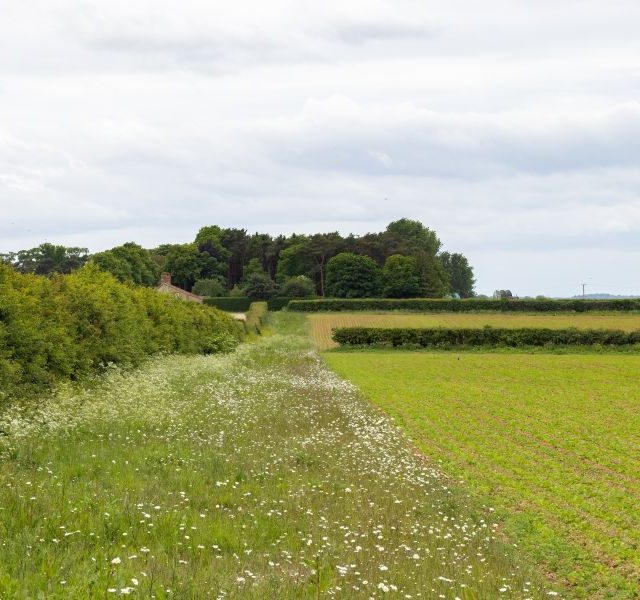
- Creating a diverse network of habitats, including flower-rich margins, hedgerows, beetle banks, cover crops and in-field strips. This will support the beneficial insects throughout the year.
- Providing connected habitats with both flowering resources and permanent overwintering areas such as tussocky grass margins, so the insects can complete their life cycles.
- Minimising soil disturbance by reducing tillage where possible to protect ground-dwelling predators and overwintering insects.
- Avoiding broad-spectrum insecticides where practical, as they can harm beneficial insects as well as crop pests.
- Using native seed mixes and managing habitats over the long term, recognising that they may take several years to reach their full value.
- Supporting a wide diversity of beneficial species rather than relying on a single predator, as different insects complement one another across crops, seasons and weather conditions.
Grass margins have positive relationship with barn owl fledging success
Habitats that support predatory insects (see above) also support other species. This interesting study by the GWCT found evidence that land with a greater area of rough grass margins had significantly higher levels of activity by mice and voles (as did places with more hedgerows), which improves the owls’ breeding success. While the use of nest boxes by barn owls was not directly linked to prey abundance or habitat type, owl boxes in places with more rough grass margins produced more chicks. The results highlight that habitat structure and location matter. Rough grass next to hedgerows or tree lines may offer both shelter for small mammals and good hunting conditions for owls. However, owl nest box occupancy likely depends on other factors too, such as competition with other raptors, nest box design, or proximity of other barn owls. The researchers conclude that the research supports the continued inclusion of tussocky grass margins within agri-environment schemes as an effective option for supporting farmland biodiversity.
Natural capital & environment
Red wildfire alert across parts of England (but advice applies to whole of)
The drought is also affecting woodlands as well as farmland. The Forestry Commission issued a red wildfire alert, the highest danger level, across parts of England last week and has urged woodland managers to exercise continued caution, vigilance and preparedness, particularly when using any machinery in woods and in managing vegetation debris from any activities. Training is available in managing fires and managing incidents through Lantra.
Rural economy & property
Number of farms for sale rises although total acreage available is steady
We have published our review of the farmland market in England for the first half of 2026. Overall, the market remains resilient, but there are inconsistencies, with significant variations in supply, demand and the prices being achieved depending on location and quality. The headlines are:
- Supply – more farms came to the open market than in any comparable period in almost 20 years. This is due to an increase in the farms for sale in the south and a fall in the north. However, the total acreage launched publicly remains relatively low at just under 58,500 acres, which is almost identical to the amount seen in 2025.
- Demand – there are more signs of demand stabilising, after a period of weakening. The proportion of farms bought by farmers continues to rise and is now at 59%, which is a seven-year high.
- Pricing – there appears to have been a change in the market for arable land, with less selling for £12,000/acre or more and an increase in the amount selling in both the £10-12,000/acre and £8-10,000/acre price brackets. This has led to the average price paid for arable land dropping to £10,500/acre. NB This is based on a relatively small number of sales and may change as the year progresses.
- Pricing – pasture land is similar, with more selling at lower price bands, which has reduced the average price paid to £8,600/acre.
Our full report is here and please contact Sam Holt, our head of estates and farm agency, or Louise Harrison, if you would like to know more or discuss a possible sale or purchase.
Increased risk to spruce from Ips bark beetle due to drought
The Forestry Commission has advised woodland managers to check their spruce trees for any that might be susceptible to the beetle, such as snapped tops and stressed and dying trees. It is also the beetle flight period so the risk of infestation is raised. Any signs can be reported to the Commission through the Tree Alert app.
Rural digital connectivity improving but the gap to urban areas still remains
Access to superfast broadband has increased to 89% of premises in January 2026 from 77% in January 2020 in smaller rural settlements, according to the latest data available from Defra. While this is positive progress, issues remain in terms of 5G mobile coverage, with just over 15% of premises in mainly rural constituencies not covered by 5G mobile signals when outdoors, compared with 1% in urban places outside London. There is also an on-going issue relating to choice of mobile network, with only 6% of premises in rural places having 5G coverage from all four operators, compared almost half of urban places. Many organisations, including the National Innovation Centre for Rural Enterprise, continue to highlight the effect that this worse coverage and choice has on both the business and personal lives of rural people.