Land Business Update | Week Commencing 6 April 2026
Farming & food
Rural Support Plan (Scotland)
The Scottish Government has published its first Rural Support Plan to give more clarity on how farmers will be supported over the next five years. It confirms the ‘four-tier’ model for farm support with some direct payments continuing, but payments being conditional on meeting enhanced baseline standards. Indirect payments will be available from 2027 for targeted actions that help to mitigate climate change or support nature restoration.
The reception from some rural stakeholders has been lukewarm. Although the direction of travel is as expected, the overall budget allocation is a real-terms reduction in funding when inflation is taken into account. Those that are striving for nature restoration and climate change mitigation are also disappointed there is little to no change for another five years in terms of meaningful incentives for farmers to adopt the sustainable and regenerative practices that the Scottish Government says it is striving for.
However, the commitment to make changes to support incrementally, so as not to lead farming businesses off a financial cliff edge has been welcomed by most. Beyond that, there looks to be a solid commitment to continue funding even at the basic Tier 1 level, which is equally reassuring. If you would like to discuss the implications, contact Stevie Whiteford.
Specialist Advice Grants now available (Scotland)
The basic premise of the scheme, run by Scotland’s Farm Advisory Service, is that it funds tailored and specialist advice from a farm advisor of the applicant’s choice. Farmers can seek advice on a range of business topics, including habitat management, farm business efficiency and succession planning. It also includes £1,600 of funding for a farm biodiversity audit, which is one of the five options set out on the Whole Farm Plan list. Contact Hamish Dunbar-Nasmith for more details.
Reminder of Farming Equipment and Technology Fund closing date (England)
The scheme provides grants for machinery, equipment and technology items which will help to cut costs and drive efficiency on farm. Applications must be submitted by midday on 28 April 2026. If you would like any more information or help with making an FETF application, please contact Natalie Gaibani or Amy Care.
Rural economy & property
Inheritance tax reforms in effect (UK)
The Inheritance Tax changes which have been at the forefront of discussions in the rural sector over the past 18 months formally came into effect on 6 April 2026. The Government’s decision to increase the IHT reliefs from £1m to £2.5m has reduced the tax burden facing many rural businesses, but some landowners still face a substantial IHT liability. Tax and succession planning remains a priority. Contact Nick Watson for more details.
First key deadline for Renters’ Rights Act approaching (England)
The countdown is on for the first phase of the Renters’ Rights Act to come into force on 1 May. The Act is one of the most significant overhauls of the private rented sector for decades, with implications for tenancy agreements, rent reviews and regulatory compliance. The key immediate requirement is to provide all existing tenants with a copy of a Government-published Information Sheet which summarises the changes. Where a tenant may be occupying under an unwritten tenancy, a Written Statement of Terms must be issued. This must be done by 31 May 2026 or could result in a fine of up to £7,000. For more details contact Matthew Scott.
British softwood timber production forecast to fall over the next fifty years (England, Wales, Scotland)
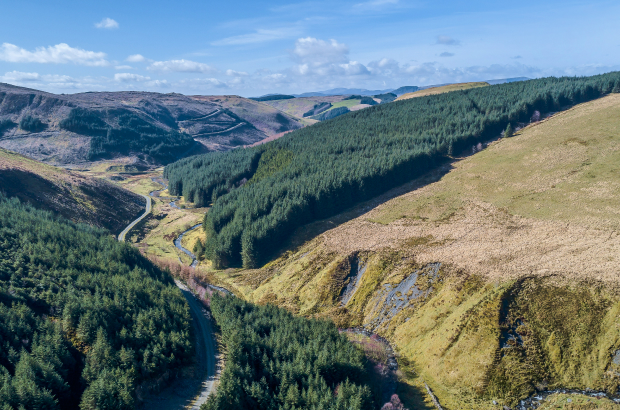
Forest Research regularly updates its forecasts of the amount of softwood timber that could be produced in the next 50 years by conifers growing in Great Britain. The forecasts are calculated by taking the ‘current’ woodland structure and applying growth and yield models and a range of management scenarios. The analysis is that an average of 14.4 million m3 of softwood timber could be produced each year, by the private and public sector, over the 50-year period. Production is expected to start falling from current levels (~ 18m m3) in the late 2030s and settle closer to ~ 11m m3. This is a reflection on lower conifer planting levels over the past three decades. S&P comment: Based on these forecasts, it looks like GB will remain a large net importer of timber, which has supply chain risks for the nation’s ability to use timber for construction and other purposes.
If you would like to discuss the forestry sector, please contact Simon Hart.
Apply to EWCO by 31 May to secure an offer to plant next planting season (England)
Although the England Woodland Creation Offer (EWCO) is open all year round, the Forestry Commission has said that applications must be complete and meet eligibility requirements by 31 May to secure funding for next winter.
Landline phone network set to close at the end of January 2027 (UK)
The network will switch to digital landlines, as it has done in other countries including Australia, Germany, France and the Netherlands. The phone providers, including BT, are reminding customers that advice and support is available with the switch and that failing to respond to messages from a provider may result in disruption to phone and broadband services. A lot of handsets are compatible with a digital landline service and most people can keep their existing phone number. Around 80% of BT’s customers have already (been) migrated to digital.
Weaker growth ahead due to the war in the Middle East (UK)
Our research team, using information from the BNP Paribas Group, has published our latest Economic and Real Estate Briefing (on 1 April 2026). Key points are:
- Economic growth is expected to be materially affected by the war. The OECD now forecasts growth of 0.7%, down from 1.2%, for the UK in 2026.
- The labour market has stabilised. Although the number of employees on payrolls fell by 0.7% in February, the number of job vacancies has stabilised, and the rate of redundancies is ticking back down. Wage growth has slowed, with private sector earnings growth halving over 2025 to 3.3% in January 2026, close to the level that the BoE considers consistent with 2% inflation.
- The reduction in inflation seen before the war has been reversed, due to higher energy costs and knock on effects. BNP Paribas Group now expects inflation to remain above target for longer, averaging in the mid-3% range for 2026 under current assumptions.
- The economic landscape has shifted significantly in the past few weeks, but the situation is fast-moving. There is thus a high degree of uncertainty around forecasts. If energy markets calm quickly, inflation would likely ease faster than now expected, but if oil and gas stay expensive or climb further, price growth could end up even higher. What is certain is that the balance of risk has tilted to the downside for the UK economy in the near term.
If you would like to discuss any of the above, please contact Charlie Tattersall.
Natural capital & environment
Sweet chestnut blight confirmed in Devon (England)
This is the first finding in 15 years in Great Britain of the fungus that causes the blight reproducing sexually. Restrictions on the felling, killing and movement of sweet chestnut trees and other susceptible material have been introduced in parts of South Devon to try to control the spread. Everyone is encouraged to engage with the Check a Sweet Chestnut campaign to help prevent spread.
“A realistic possibility that by 2030… our food… and natural ecosystems are at strategic risk of catastrophic failure” (UK)
This shocking assessment is in a report commissioned and produced by Defra in 2024 called Status of Defra’s critical systems to 2030 and beyond, according to a report in The Times. It concluded that not only Britain’s food supply, but also its water supply and international trade networks, were “almost certain” to be “on a decline and collapse trajectory”, meaning there was “a realistic possibility that by 2030 (increasing to 2050) our food, water and natural ecosystems (etc) are at strategic risk of catastrophic failure”. Tim Lang, emeritus professor of food policy at City University, said it is a “credible and sober assessment”. It echoes warnings from a group of anonymous food industry executives, whose memo was published in The Grocer, who said their sector had “reached a moment of threat to food security like none other we have seen” and that companies were woefully unprepared for the effects of soil degradation, climate change and water shortages. Lang called for a bigger share of profits from food to go to farmers to incentivise growers to grow.
We need a cultural shift to solve the nature crisis (UK)
Professor Tom Oliver, associate pro-vice-chancellor for research (environment) at the University of Reading, has written an article for the Green Alliance on why society continues to destroy nature, through an extractive economy where the damage done to nature has become so severe that it is generating systemic risks, such as food insecurity, geopolitical strife, a potentially uninhabitable climate and potentially a risk to our civilisation. He cites a report from the Intergovernmental Platform for Biodiversity and Ecosystem Services (IPBES) which highlights three, interrelated, root causes of the environmental crisis: disconnection from, and domination over, nature and people; concentration of power and wealth; and prioritisation of short term, individual and material gains. He says all these relate strongly to the culture we live in and suggest we need to ‘fix ourselves’ to make progress. He concludes that reconnection is the route forward, shifting from our culture of a damaging economy to one that enables us to live in more harmonious balance with the planet. We can all change how we behave – now – but he says the biggest scientific challenge of our time for governments is how to assess this approach and apply it to all activities.