Land Business Update | Week Commencing 25 May 2026
Farming & food
UK vineyard business survey 2026 – open for responses now (UK)
The UK viticulture sector has gone through a period of rapid growth and has had some bumper years recently. We would like produce a picture of the state of the UK vineyard sector by asking viticulture businesses about the factors that impacted the performance of their businesses in the last full harvest year and wine cycle, so 2025. The survey is here and takes less than five minutes to complete. Any responses will be treated as confidential. The results will be published in our Annual Viticulture Land Report. Plumpton and Vinescapes are also kindly sending it to their contacts.
Farm and rural policy following the May elections (Wales, Scotland, England)
The elections will have different effects in different countries, with the greatest changes likely in Wales:
- Wales – the long-standing Labour government has been replaced by Plaid Cymru as the largest party in the Senedd but they do not have a majority, which means that they will need the support of other parties to pass laws and agree budgets. They hope to confirm a multi-year funding cycle in their first 100 days, including for the Sustainable Farming Scheme. They will also commission an independent review of regulation on farming and produce a new national food strategy, which will use public procurement to support the food and farming sectors. This programme is therefore slightly different to the previous government’s. Plaid also won significant support in urban areas, which in part voted for them on a progressive environmental platform, including substantive nature recovery, climate change and net zero (which they aim to reach by 2040, not 2050 as in the UK). This will mean dealing with potential tensions between their pro-farming policies and their environmental ones, which will require, for example, more solar farms, on-shore wind and energy infrastructure.
- Scotland – the SNP won a fifth successive election but do not have a majority, so there may be some changes in policy as they will rely on other parties’ support to pass legislation. There will also be a new Rural Affairs minister as Marie Gougeon did not stand for re-election.
- England – little or no effect likely as no change in national government.
Animal welfare committee questions welfare effect of focus on emissions (UK)
A report from the animal welfare committee, which is comprised of independent experts, says that the current keenness to reduce carbon emissions from livestock production is risking ‘negative consequences for animal welfare’, by encouraging the use of breeds that have health problems. The report comes after 18 firms pulled out of the Better Chicken Commitment, under which they had pledged to switch to slower-growing breeds. The committee also raised questions about the impact of feed additives to reduce emissions, including for dairy cows, saying that the effect on eating, resting, ruminating and overall welfare were unknown.
Natural capital & environment
Warnings that a developing El Niño warming cycle would intensify extreme weather (UK)
Climate scientists around the world are warning that a strong or very strong El Niño warming cycle appears to be developing that would intensify extreme weather. El Niño is a naturally occurring weather pattern in which sea temperatures in the tropical Pacific Ocean rise, which increases air temperature across the world and so increases the likelihood of floods, droughts and fires. Already, Spain has had its warmest April on record. While there is uncertainty about weather predictions, this is another piece of evidence that supports making land use and farming systems more resilient, and factoring in more extreme weather into building projects. There is no evidence that climate change increases the frequency or intensity of El Niño events, however, the combination can lead to more extreme weather conditions and rainfall patterns.
UK ‘built for climate that no longer exists’ – warnings and recommendations for us all (UK)
The Climate Change Committee (CCC) has published its latest report on adapting to the impacts of global heating. It is extremely sobering and essential reading for land and property managers. The chair of the adaptation subcommittee of the CCC said that in 2050, “you could turn the tap on and nothing would come out”. The report says that we should prepare for 2C of global heating by 2050, as attempts to limit rises to 1.5C above preindustrial levels are likely to fail. Due to this, the UK will experience more extreme heat and deaths due to it, as about nine in 10 UK homes are likely to overheat; more flooding, with 40% more houses at risk of flooding; and more droughts, with the shortfall in the water supply potentially reaching 5bn litres per day in 2055.
There are numerous recommendations for everyone:
- Consider the heat resilience of houses as many will become unliveable in during a heat wave, including fitting air conditioning (in all or part of the house), shutters and shading using trees.
- Review how at risk of flooding your house(s) is – and take steps to mitigate and adapt.
- Use water more efficiently – farmers should review the sustainability of abstraction licences and consider building reservoirs, either individually or jointly, as well as improving the soil moisture retention of their soils (which will also help support yields).
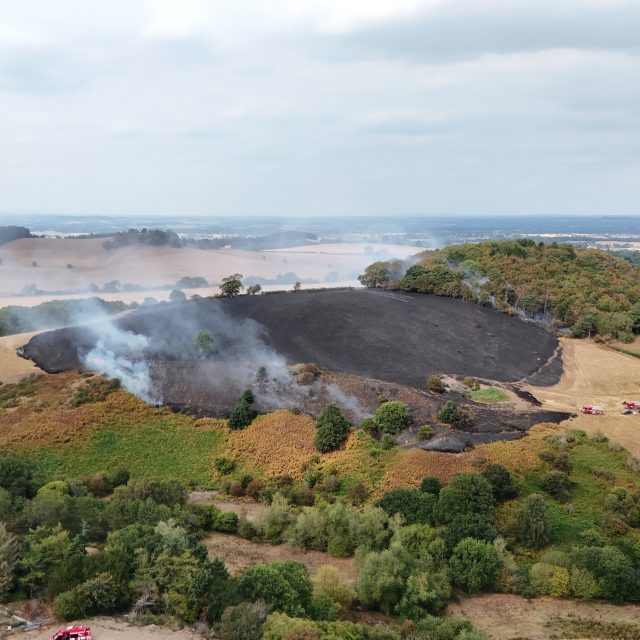
- Review the risk of wildfires on land, as the number of high-risk days for wildfires are likely to double by 2050.
- Plant trees, including non-native ones, to keep places and streets cooler. They can reduce urban temperatures by 8C.
Some people (and political parties) may think this is unaffordable but they often ignore the existing cost of climate change, which is estimated to be around £60bn a year in the UK, which is 2% of GDP; this includes flood damages and loss of crops. This figure is estimated to increase to around £260bn a year, so 10% of GDP, in just over two decades if adequate action is not taken. The CCC said that investing in measures to adapt (@ £11bn a year) would help prevent £60 – 260bn in annual damages. Responding to the report, Chatham House said that the UK, as a priority, should improve the implementation of existing plans and strategies, rather than create new ones.
Surviving drought: reclaim the rain – new report from the House of Lords Environment and Climate Change Committee (UK)
In the same week that the CCC warned about preparedness for the impacts of global heating, this report has a similar theme but in relation to drought and water supply. It raises a significant number of questions / challenges for the government, water companies and us as consumers, on water demand as well as supply. It is also very relevant for land managers, as many businesses rely on abstraction licences. The 2026 white paper, A new vision for water, proposed a number of changes to how the water system operates. It is likely to require land managers to navigate a new set of organisations and regulations, such as the new Water Abstractor Groups; the remit of Internal Drainage Boards (and whether they should have a role beyond drainage to include wider water resource management); when abstraction licensing is moved into the Environmental Permitting Regime (EPR); and how Regional Water Resource Groups should engage with industry, agriculture and other sectors on water resource planning and drought resilience. As the Lords pointed out, there are a large number of stakeholders involved in water planning and there needs to be clarity on their roles and responsibilities.
The UK legislative programme – The Wildlife Trusts urge the government to do better for nature (UK)
It is unclear how much of the legislative programme announced in the King’s Speech will be delivered given the uncertainty over the government’s leadership. Very few of the 27 bills that were included appear to relate to nature, despite the government’s commitments to restore it. Before the speech, the Wildlife Trusts had proposed eight bills that it says would put ‘legal boosters’ under efforts to restore nature and it is interesting to compare them with the government’s ambition. In making the case for the bills, the Trusts said that there is even more evidence that nature decline is a growing risk to the UK’s economy and overall security, citing the UK Government’s summary of the National Security Assessment on global biodiversity loss. Their proposed bills are:
- The Nature Investment Bill – to increase private investment in nature recovery by establishing a governance framework for nature markets, including minimum standards and a dedicated regulator, to encourage investment.
- The River Restoration Bill – to remove artificial barriers in rivers which impede species movement and cut off rivers from wider freshwater networks.
- The Peatland Recovery Bill – to conserve peatland by banning its use in horticulture and restricting development on deep peat.
- The Better Land Use Bill – to reduce the production of environmentally damaging bioenergy, minimise harmful impacts of intensive livestock farming, enforce the Land Use Framework and enhance restoration on land protected for nature.
- The Bison and Elk Return Bill – to create a new regulatory regime for the reintroduction of large herbivores to the wild in England.
- The Nature & Climate-friendly Development Bill – to increase habitats alongside new homes through design measures such as swift bricks and increasing private investment in Biodiversity Net Gain markets.
- The Access to Nature Bill – to fulfil the Environmental Improvement Plan’s commitment to ensure that everyone has access to green or blue spaces within a 15-minute walk from home.
- The Ocean Emergency Bill – to tackle the rapidly deteriorating marine environment, including review of planning processes and a whole-site ban on bottom trawling in Marine Protected Areas and a Marine Spatial Plan across English seas.
Peatland Restoration Sector Capacity Grant opening (and closing) shortly (England)
This scheme will fund activities that contribute to the growth of the peatland restoration sector in local areas, such as subsidising the cost of specialist machinery, hosting events, subsidising apprenticeships or internships, training courses and buying equipment, such as training simulators. It is open to any organisation involved in peatland restoration. Grants are a maximum of £20,000 per year but multi-year applications can be made. Payments will be made in arrears at the end of the financial year. The application window is June and July.
Squirrel management in woodlands (UK)
The Forestry Commission, with the UK Squirrel Accord and The National Forest, has produced five short videos (@ 4 minutes each) on practical advice on squirrel management for woodland owners and managers, including how to manage woodland to benefit red squirrels, the impact of grey squirrels on woodland ecosystems and how to carry out monitoring and management.