Helping farms to make the right decisions on rooftop solar
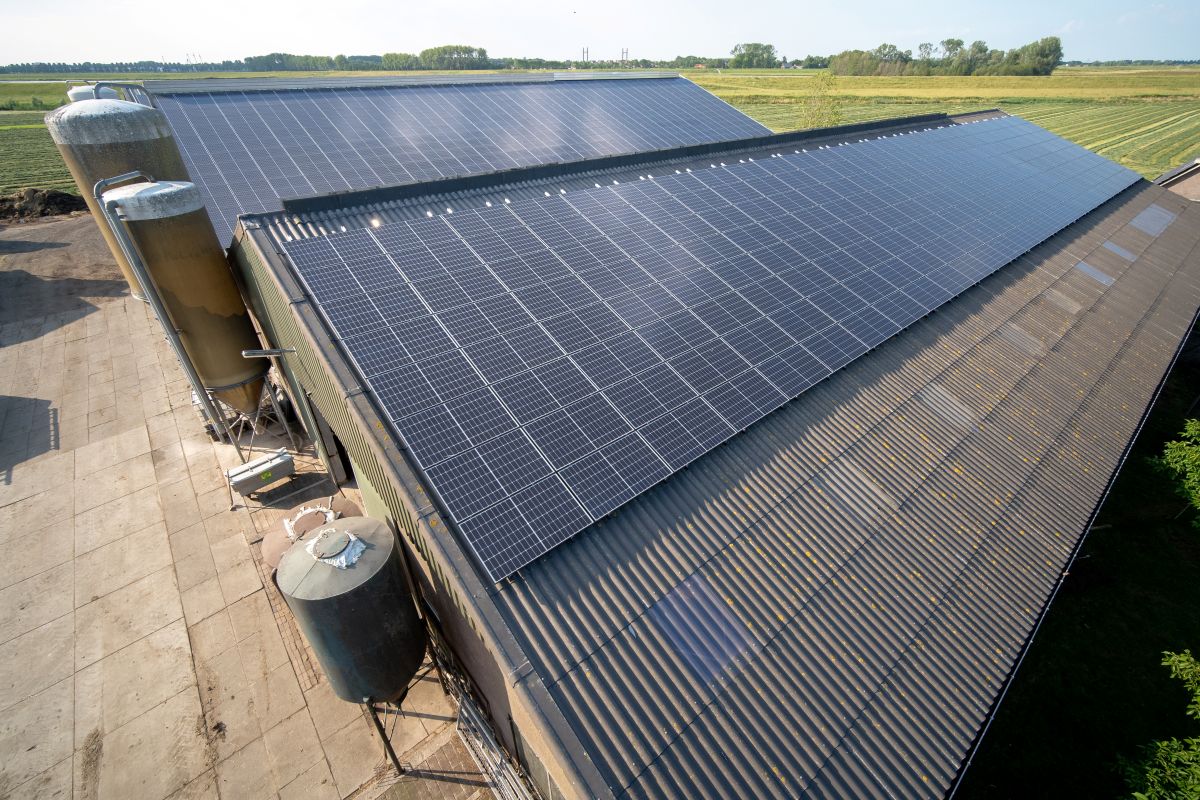
At a time when electricity prices for businesses remain volatile, rooftop solar is a proven way of helping farming businesses to lower energy costs and potentially generate income from surplus power.
But the success of a project depends on getting the fundamentals right: choosing the right-sized system, making sure you are on the most appropriate tariff, and exploring the full range of opportunities for how it should be funded.
“Volatility in energy prices is one of the main reasons farmers should be looking at rooftop solar if they have not already done so,” says Anthony Field, Head of Energy at Strutt & Parker.
“Everyone knows that farming is tough at the moment and finding ways to reduce your exposure to volatility is an important part of risk management.”
The starting point is understanding how much electricity the business uses, when it uses it and how much generation can realistically be used on farm.
“You need to understand how much electricity you are likely to use yourself, how much could be exported and whether battery storage makes sense,” says Anthony.
This is particularly relevant for businesses with significant electricity demand outside daylight hours, such as dairy farms. While battery storage will allow electricity generated during the day to be used when it is needed, the economics will depend on the individual business.
Choosing the right tariff
Import and export tariffs will have a significant impact on the returns generated by a solar installation.
Farmers should shop around for the best rates for electricity they buy from the grid, as well as the rate received for surplus electricity which is exported.
“If you do not have the right export arrangement in place, you could end up sending electricity to the grid without getting the best possible return,” says Anthony.
Funding options
Farmers should not assume they necessarily have to fund the whole installation themselves.
For tenanted farms, a conversation with the landlord could be particularly worthwhile.
“We have worked on projects where the landlord has been willing to fund the installation of solar panels and battery storage infrastructure, with the tenant buying the electricity generated at an agreed rate through a power purchase agreement. This can give the landlord a return, while potentially providing the tenant with cheaper, fixed-price electricity without the upfront capital cost.”
Third-party developer arrangements may also be an option for schemes where a farming business has high electricity demand and substantial roof space.
The economics of a scheme will vary. “Every farm is different, so there is no single cost or payback period that applies across the board,” says Anthony.
But a client recently invested £85,000 in a solar PV system, which is generating 130,000 kwh of electricity per year, leading to an annual saving of £23,000 in their energy bills. On this basis, the payback period will be 3.7 years.
“Our role is to take into account the wider context and provide independent advice on the options, enabling informed decision-making.”
To find out more contact Anthony Field or Nick Bramley.