Energy, Nature and Net Zero Update | March 2026
Strutt & Parker’s Energy, Nature and Net Zero team consists of a UK-wide network of industry-leading chartered surveyors, qualified professionals and foresters, who unlock opportunities for landowners and managers within the environmental and energy sector. Updates within these sectors are provided below, with relevant contact information if you wish to discuss them further.
Policy, legislation & grants
Sustainable Farming Incentive to open in June 2026 (England)
Farmers now have enough detail to begin preparing for a 2026 Sustainable Farming Incentive (SFI) application. Although the size of the total SFI budget is still to be confirmed, which will govern how many agreements can ultimately be offered, we do now have clarity on what actions will be available and the payment rates that will apply.
The headline details of the scheme are that there will be 71 options on offer in 2026, down from 102 in SFI 2024, with the value of agreements capped at £100,000 per year.
Various other aspects of the scheme will also be tightened, for example, there will be an area cap for the enhanced overwinter stubble action (AHW7) and any five-year actions will become three-year actions.
Payment rates for moorland actions will be increased, while those for herbal leys, winter bird food and legume fallows will be reduced (see table below for main changes). The SFI management payment has been withdrawn.
| Action / Category | Previous Rate | Proposed 2026 Rate | Change |
| Herbal Lay (CSAM3) | £382/ha | £224/ha | Reduced |
| Winter Bird Food (CAHL2) | £853/ha | £648/ha | Reduced |
| Legume Fallow (CNUM3) | £593/ha | £532/ha | Reduced |
| Moorland Grazing (UPL1) | £20/ha | £35/ha | Increased |
| Management Payment | £50/ha (plus first-year uplift payment) | £0 | Removed |
| Number of available actions | 102 | 71 | Reduced |
The scheme will reopen in June 2026 for farms under 50ha or for applicants who do not have an existing SFI, stewardship or other ELM agreement. Other applicants will have to wait until September 2026.
Strutt & Parker’s Farming team works with farmers to select appropriate actions in advance and make sure that there are no ‘blockers’ from existing or old agri-environment schemes in the RPA’s systems. If you would like support with your agri-environment scheme planning and application, or would like to discuss other available funding opportunities, please contact our farming team.
Revised Environmental Improvement Plan published (England)
A revised Environmental Improvement Plan (EIP) was published by the Government in December 2025. The plan has been described as a roadmap for nature restoration and sets out how England will deliver on its environmental targets over the next five years. It has implications for land managers, as future regulation and agri-environment funding are likely to be aligned with these targets.
The EIP is structured around 10 core goals, which include 91 commitments, interim targets, roles and timelines for delivery. The Chartered Institute of Ecology and Environmental Management (CIEEM) has described the revised plan as “a reshaping of the framework intended to deliver the Environment Act’s legally binding commitments”.
The plan aims to deliver outcomes such as:
- Cleaner air and water
- More thriving wildlife and nature recovery
- Stronger resilience to climate hazards
- A thriving circular economy
- Greater access to nature for all communities
Key targets within the plan include:
- To restore or create 250,000ha of wildlife-rich habitat outside protected sites by December 2030.
- Create or restore 48,000km of hedgerows by 2037 and 72,500 km by 2050.
- Increase tree canopy and woodland cover by 0.33% (43,000ha) by Dec 2030.
- Reduce agriculture-derived nutrient pollution by at least 12% by Dec 2030.
While the revised plan has received a broadly positive welcome, concerns have been raised regarding deliverability and timeframes. Around 90% of the plan’s commitments currently fall on Defra and its agencies to deliver.
For advice on navigating environmental targets and funding opportunities available for landowners, please contact Lauren Clarke.
£500 million for Landscape Recovery projects, but exit clause concerns (England)
To support the delivery of the Environmental Improvement Plan, the Government has committed £500 million towards Landscape Recovery projects.
It has said:
- £500m for Landscape Recovery projects will be invested over at least a 20-year period.
- The majority of Landscape Recovery projects propose to continue farming in the project area and are demonstrating how food production and environmental delivery can go hand-in-hand.
- Where there is land use change as part of a project which takes land out of food production, it is typically on lower-grade agricultural land. As a result, there should be minimal impact on overall food production levels.
- Several projects have already entered development phases with further allocations of funding to be made in due course.
However, an exit clause included within agreements has raised serious worries within the sector about the long-term viability and security of projects. The clause in question allows the Government to terminate contracts with as little as 12 months’ notice, which critics argue undermines the 20 – 30-year agreements and, in turn, the environmental goals over a project’s lifetime. With projects requiring significant investment from landowners and the private sector, the current exit clause is a cause for concern and expected to have an adverse uptake on future uptake of the scheme.
Hannah Bloxham, who is based in our Cirencester office, has previously worked on Landscape Recovery projects, advising on the contracts and legal documents required for their delivery. Please contact her to talk about the implications of entering into long-term nature deals.
Biodiversity Net Gain policy change (England)
After a consultation on how Biodiversity Net Gain (BNG) can be improved for minor, medium and brownfield developments, the Government has confirmed that developments in England below 0.2ha will be exempted from mandatory Biodiversity Net Gain (BNG) requirements.
These changes are part of a wider revision to the National Planning Policy Framework (NPPF) aimed at accelerating housebuilding and reducing delays within the planning system. The revised NPPF was launched for consultation in mid-December 2025. Testing is also underway on appropriate definitions of brownfield in relation to BNG, as well as a range of potential exemption sizes up to 2.5ha.
Prior to the announcement, it was rumoured that a 0.5ha exemption would be put in place, resulting in 80 organisations writing to the Government expressing serious concerns and calling for a minimum threshold of 0.1ha instead. While the 0.2ha exemption has been welcomed as an improvement on the rumoured 0.5ha, environmental organisations have continued to express strong concerns about the changes. The RSPB has described them as a “blow for nature”, warning it undermines the UK’s biodiversity commitments and puts private investment in nature at risk. The Wildlife Trusts has warned that it could undo progress made since BNG was introduced and remove millions of square metres of land from potential habitat creation.
A full consultation response and implementation timeline for the new arrangements is due to be published early in 2026. Developers should continue to apply BNG in its current form until the changes are officially implemented. The Government has also affirmed its commitment to implementing BNG legislation on Nationally Significant Infrastructure Projects (NSIPs) which will become mandatory from May 2026. To discuss BNG policy and how it relates to you, please contact James Oliver.
Biodiversity Net Gain market update (England)
The off-site BNG market has grown through 2025, in terms of the number of registered sites and units on the BNG register. It has been estimated there has been a 300% increase in registered BNG units since January 2025, with a total of 190 registered BNG sites covering 4,263ha of land.
Meanwhile, Defra recently published a tender for the procurement of BNG units, using income generated from the sale of statutory BNG credits. These credits are the ones purchased by developers who cannot achieve the required 10% net gain either onsite or through an offsite habitat bank. Defra has said it intends to purchase the maximum number of units it can from a single registered site in England for an indicative total value of £500,000. The units must be either Very High or High Distinctiveness units, with examples of the unit types Defra is intending to purchase including lowland meadow grassland, floodplain grazing marsh and lowland mixed deciduous woodland. Defra has stated that this procurement will not set a precedent for how future income from BNG credit sales will be invested.
Our Nature and NetZero team has recently been involved in several valuations where the revenue and ongoing management costs of a 30-year BNG project have needed to be considered. We are seeing an increase in interest in the valuation of BNG and carbon projects and expect these to become common practice within future land valuations. For further information, contact Charlotte Whiston.
Nature markets
Nature-based carbon markets & Nature Finance Project Pipeline Annual Review (UK)
2025 saw the continued expansion of the nature-based carbon market, methodologies and standards. The recent Nature Finance Project Pipeline Annual Review, published by the Ecosystems Knowledge Network, provides an overview of the current market and areas of growth.
The Woodland Carbon Code (WCC) and Peatland Code (PC) continue to be the pillars of the market with the WCC representing circa 24 million tonnes of carbon over the lifetime of 2,200 projects and the PC representing circa 8.8 million tonnes of projected carbon over 365 projects.
Geographically, WCC projects are evenly distributed between Scotland and England, however the average English project size is around 20ha while Scottish projects are typically over 100ha, meaning three quarters of the project units are in Scotland. 2025 figures are yet to be published, however 2024 saw 277,815 units sold as Pending Issuance Units (PIUs) at an average price of £26.85. Currently one-third of all claimable WCC and PC units are located within the Scottish Highlands, with ten of the 270 registered developers holding roughly 50% of projected units. The Nature Finance report links this market concentration to the upfront capital costs of projects and the need for technical expertise to successfully implement and register a project.
Expansion outside of the two ‘traditional’ codes continues with the development of codes and standards that can account for wider environmental benefits, providing ‘high integrity’ carbon units that are aligned with corporate strategies. Wilder Carbon is an example of the expanding market. The standard considers the multiple environmental benefits of each project alongside carbon and sequestration. Units will only be traded or sold to organisations that meet the standard’s ESG criteria. Wilder Carbon currently has a minimum price of £100/Estimated Issuance Unit, which is equivalent to a tonne of carbon. These higher unit prices in comparison to the £26.85 for a PIU through the WCC are justified due to the stricter criteria each project developer must also abide by and the ‘high integrity’ or ‘charismatic’ carbon units the projects will generate. The Boothby Wildland project, delivered in partnership with Nattergal, sold 10,000 units at a value of £100/tonne to Arup in 2025 in a £1 million sale. However, project costs are significant, totalling £5.2m for the project. With a further 25,628 units available to sell from the project, it is likely that further private or public funding opportunities will need be stacked on top of the ‘charismatic’ carbon units.
Strutt & Parker has to date been involved in the restoration of over 860 hectares of peatlands and is currently working to restore a further 200ha. This has been completed over seven phases with four of these phases registered or validated under the UK Peatland Code. If you are interested in carbon projects, either as landowner or as a business looking to invest, please get in contact with Joel Paterson (Scotland) or Gwilym Jenkins (England).
Natural Capital Report 2026 (UK)
Natural capital investment is moving into the mainstream when it comes to institutional portfolios, according to new research produced with support from BNP Paribas Asset Management. The Natural Capital Report 2026, published by Mallowsteet, explores how UK and European institutional investors are approaching natural capital, based on responses from 68 UK institutional asset owners representing more than £3 trillion in assets.
Two in five investors who do not currently hold a natural capital allocation say they plan to make their first investment within the next five years, while many existing investors are preparing to scale up. Looking ahead to 2030, 94% of local government pension schemes respondents expect to hold an allocation, alongside 75% of defined contribution pension schemes and insurers, 58% of defined benefit schemes and half of charities.
However, expectations of asset managers are also rising. The research highlights that they are increasingly looking for project-level key performance indicators when assessing natural capital strategies, rather than regulatory labels. While familiar themes such as forestry, timber and agriculture remain popular, investors are also increasingly focused on revenue streams that can reduce risk across the rest of their portfolio, such as flood protection and clean water provision. Carbon and biodiversity credits are more often viewed as a potential upside rather than core drivers of investment decisions.
Energy
Pipeline of energy and storage projects confirmed after grid connection overhaul (England, Wales, Scotland)
Great Britain’s National Energy System Operator (NESO) has confirmed the pipeline of energy and storage projects that will be prioritised for connection to the electricity networks. The queue for connections had ballooned to 700GW in recent years – four times more than Britain needs to meet its Clean Power 2030 target – because the ‘first-come, first served’ approach was leading to bottlenecks where projects were either not ready to go, or not viable.
In early December 2025, NESO announced that it had identified 283GW of projects that will move forward now, with 300GW of projects in the old connections queue not progressing to the next stage at this time. This is because they are either not ready to proceed or are not aligned to national targets. The 283GW of approved projects is comprised of 132GW of new projects, plus 151GW of existing projects identified as needed to meet Britain’s needs by 2035 and strengthen our long-term energy security.
Meanwhile, the industry-body Energy and Utility Skills has estimated that the electricity sector’s workforce will need to grow by more than 130,000 by 2030, covering generation, transmission, distribution and the wider supply chain. To deliver on its investment plans, Scottish Power’s transmission division will need to more than double its workforce over the coming years, increasing the workforce from 1,200 to 2,600.
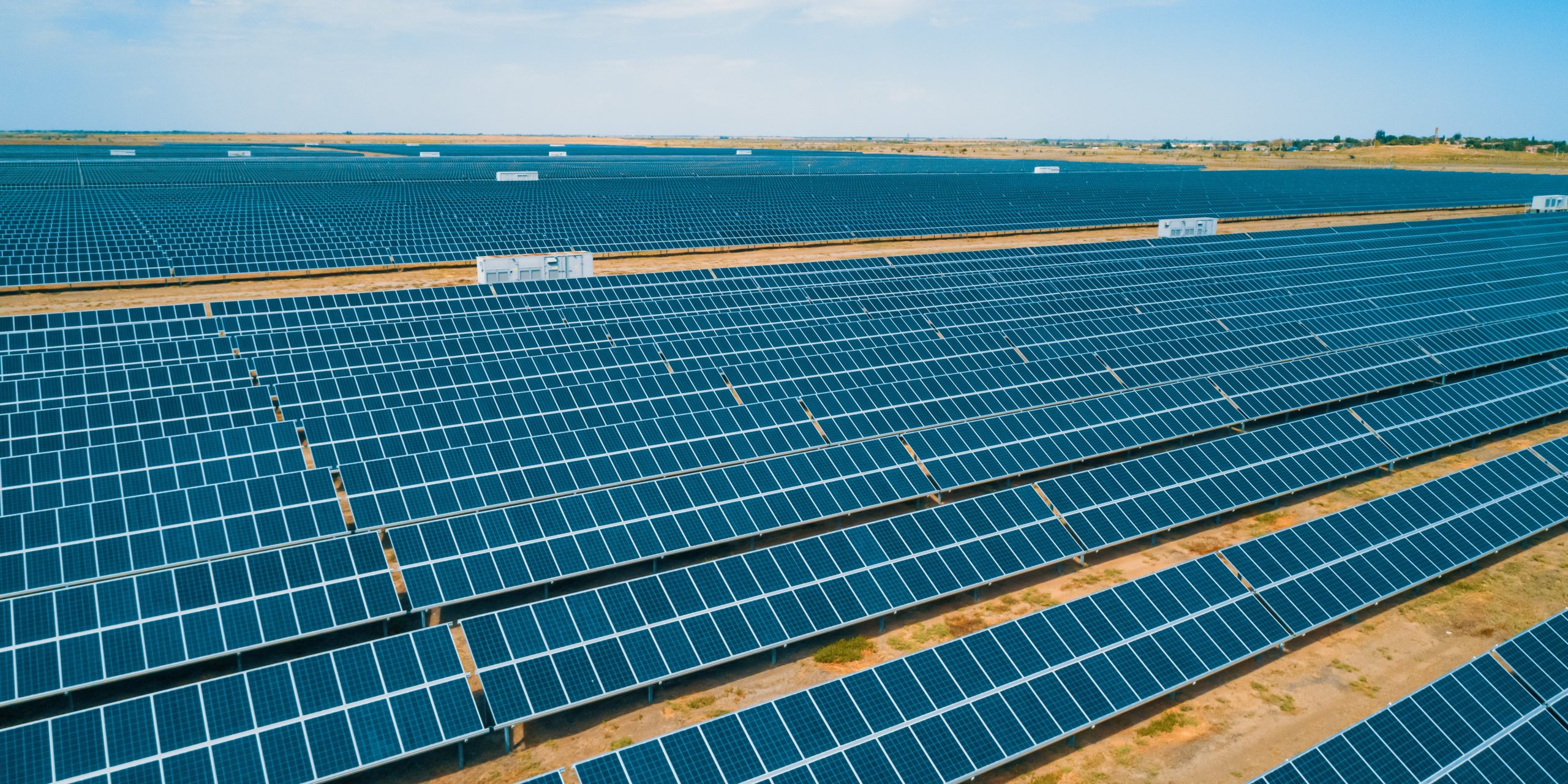
Our energy team is involved in a range of renewable energy projects including large- and small-scale solar developments, Battery Energy Storage Systems (BESS), wind turbines and Electric Vehicle (EV) charging infrastructure. Contact Anthony Field or Nick Bramley if you are thinking of investing in renewable energy technologies or have had a third-party operator approaching you for the lease of land.