The role of nature-based solutions in improving water resilience
Landowners across the UK are increasingly caught between having too much water and too little.
In recent years, many have faced increasingly challenging conditions, from flooding and waterlogged soils that have made land difficult to work, to periods of hot, dry weather that have hit forage supplies, crop yields and seen private water supplies dry up for the first time in many generations.
According to the Met Office, the UK’s climate has become steadily wetter since the 1980s, due to an increase in rainfall falling during the winter months. Although winter 2025/26 was not the wettest on record for the UK as a whole, several counties did experience their wettest winter ever, and many more ranked within their top five.
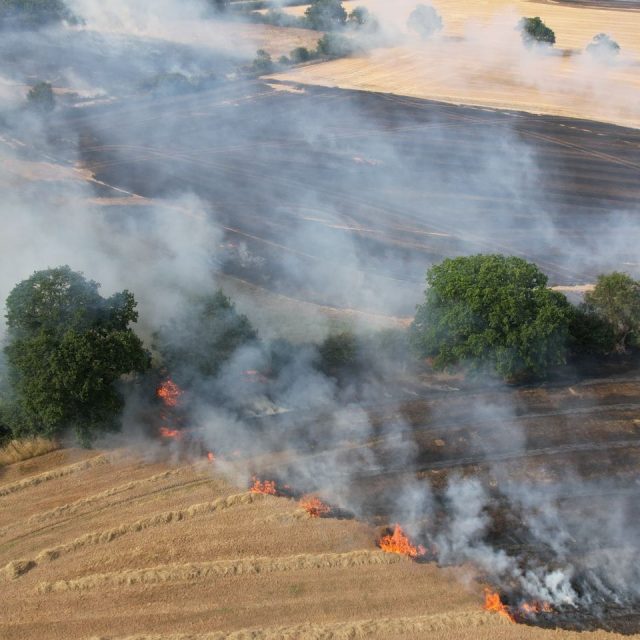
Meanwhile, Met Office data also confirms that summers are getting sunnier and hotter, with 2026 now confirmed as the warmest UK summer on record. At the time of writing, all of Wales and almost three quarters of England remains in drought, while a number of catchments in Scotland are also facing significant or moderate water scarcity.
Inevitably, this raises the question: can we manage water more effectively, capturing and storing it when there is too much so that it is available when it is needed?
For farmers and landowners, this might mean investing in new on-farm reservoirs and rainwater harvesting systems, while also improving drainage, reducing leakage and making their irrigation equipment more efficient.
But alongside these more conventional measures, nature-based solutions (NbS) offer another way to manage water – working with natural processes to provide environmental, biodiversity and social benefits, while also increasing the land’s resilience to flood, drought and climate change.
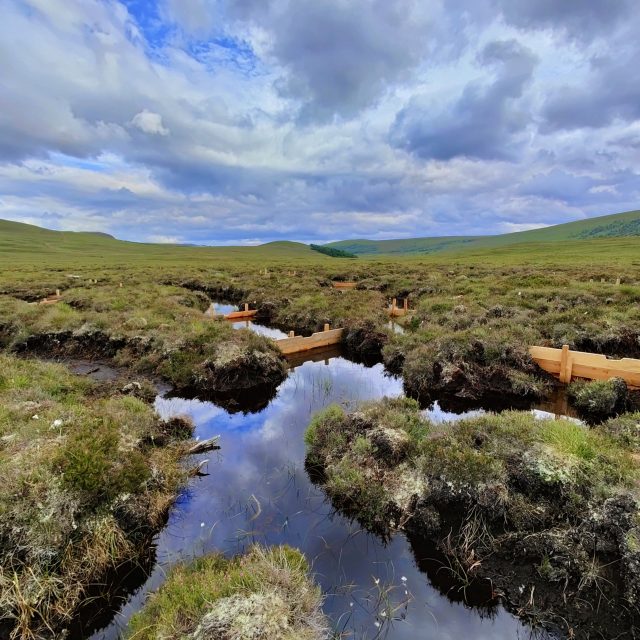
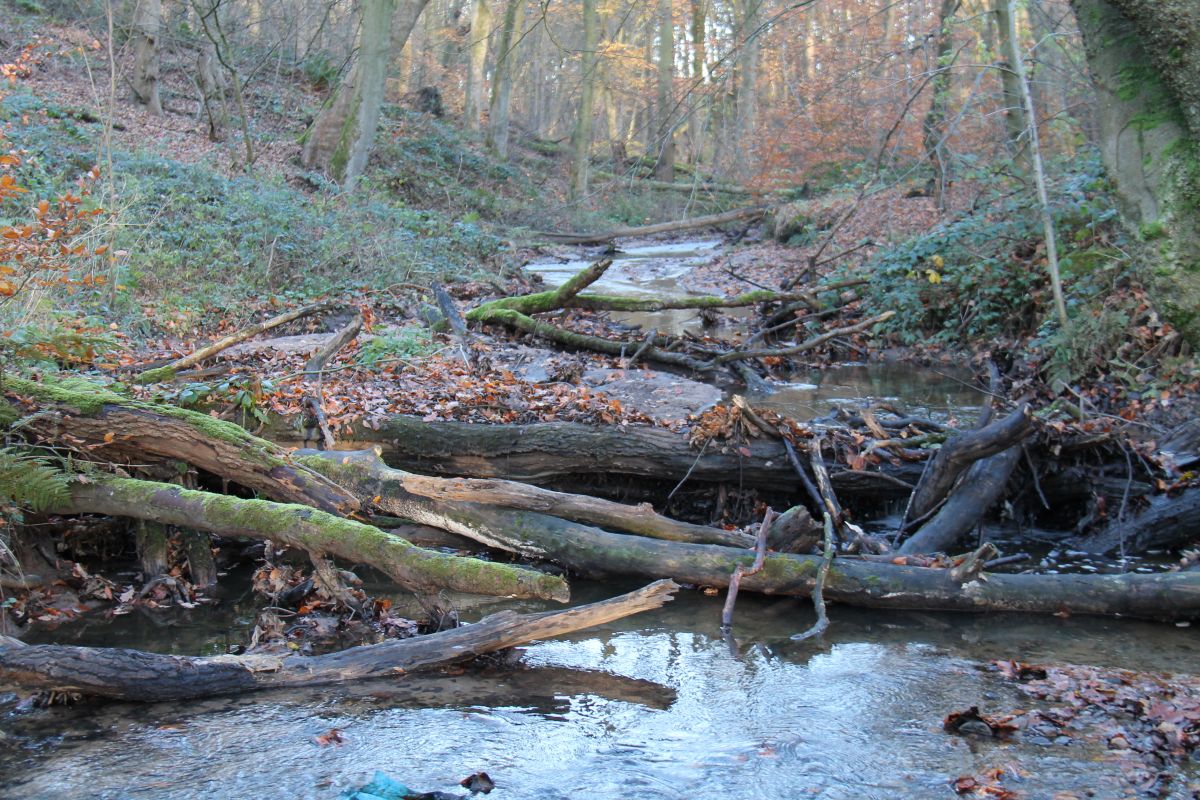
NbS such as leaky barriers, water retention ponds, riparian woodland, cover crops, buffer strips and peatland restoration can help slow and retain water in the landscape, allowing more to infiltrate into soils and groundwater. In doing so, they can help reduce the impacts of excess water while keeping water available for longer when conditions turn dry.
The Environment Agency has recently published an Overview of nature-based solutions for water resources handbook, which has a useful breakdown of different types of NbS, what their outcomes for water resources might be and how long they might take to become effective.
Effective nature-based solutions
There are three key steps to ensuring NbS are effective; choose the right NbS, implement it in the right place, and at an appropriate scale to have impact. This requires understanding of the properties of the landscape and its hydrology, or how the pathways of water change with varying weather conditions. Analysis of different datasets, the use of mapping and modelling tools alongside ground-truthing and local knowledge and experience help to ensure these key aspects are considered, so that NbS are located to deliver the greatest impact.
We have recently worked on a project where the client wanted to improve the resilience of their private water supplies, both in the short and the long term. In particular, they wanted to explore the use of NbS as a way of improving water efficiency, drought resilience and their environmental credentials, while also reducing their costs and risks over time.
We took a three-step approach to this project:
- First, we mapped private water supplies to understand the spatial distribution and context behind the supplies which ran dry in summer. Interviews with tenant farmers revealed limited historical monitoring of water use as water had always been available, however concerns had increased following the 2025 drought. As water availability gets more unpredictable, monitoring and optimising use, reducing leakage, on-farm storage and identifying risk periods will help to improve resilience in the short-term.
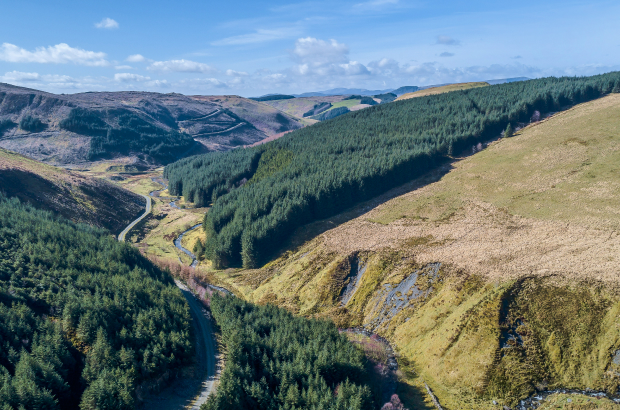
- The second stage of the study involved analysis of multiple spatial datasets to gain understanding of the hydrological catchments and landscape properties, identifying areas of medium and optimal opportunity for NbS that would retain water and improve infiltration to groundwater. This allowed us to create maps marking the specific areas within a catchment where there was most potential for NbS, alongside areas for peatland restoration and changes in forestry management.
- The final stage of the project was to identify a range of NbS options which would be suitable for catchment-scale and local scale implementation. As part of this, we provided evidence from existing projects of the potential costs and benefits so that NbS approaches could be directly compared to alternatives to ensure they would reflect wider business needs.
Our approach provided the client with a selection of short-term changes they could make to improve their operational resilience. For the medium- to long-term, strategic NbS deployment was recommended, as we were able to identify appropriate NbS that deliver a cost-effective approach to safeguarding water resources in future, with multiple additional benefits.
Some solutions will deliver almost immediate benefits in terms of improved yields and water-cost efficiency. But it is also worth quantifying the future costs that NbS could help to avoid, particularly in scenarios where water scarcity could result in crop failure or create significant challenges for livestock management.
S&P have the technical expertise to evaluate the potential for NbS and establish the costs and benefits from both an environmental and business perspective, for example translating to profit and loss (P&L) statements for an individual farm. We can also help to identify funding support, and deliver implementation on the ground. If you are interested in any of the services mentioned above, please get in touch.
Dr Jessica Fennell is a natural capital consultant at Strutt & Parker, with experience in environmental restoration, hydrological modelling, field-based monitoring and spatial data analysis. She has a MSc in Environmental Water Management and a PhD in Geosciences, where she researched the effectiveness and cost-benefits of NbS for improving water availability for a whisky distillery in Scotland.