The future of rural estates: Decline or transition?
Rural estates are facing a defining moment that calls for an approach that goes beyond what many may think of as traditional land management.
At a time when the UK is focused on strengthening energy and food security, alongside nature recovery and climate mitigation, rural landowners and estate managers find themselves central to some of the nation’s most important policy and investment decisions.
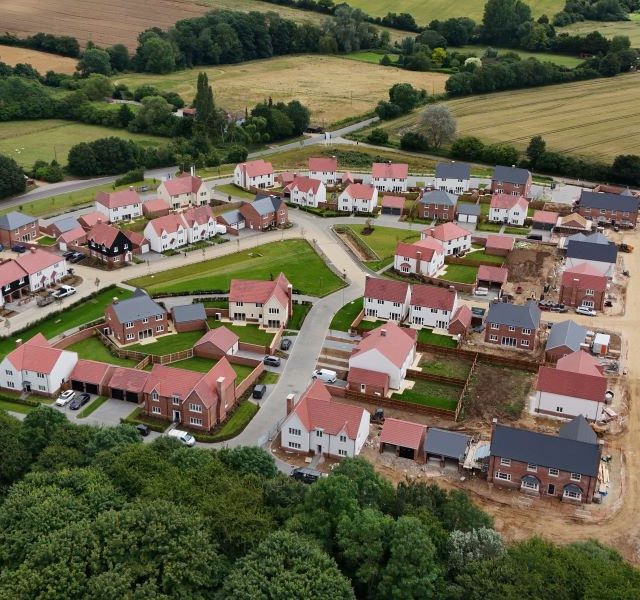
The recent Land Use Framework reflects this shift, signalling a future in which land is expected to deliver multiple outcomes simultaneously from producing high quality food and nature-rich habitats to renewable energy generation and the delivery of new homes and infrastructure.
However, there is currently a disconnect between the strategic importance being placed on rural land and the level of confidence experienced by those responsible for managing it. Many estates, farmers, and rural businesses are feeling the strain of operating in a business environment characterised by rising costs and increased regulation.
A shifting landscape
Uncertainty has become the new normal. But there is room to be cautiously optimistic for the future of those land-based businesses which are willing to evolve their approach.
The rural sector isn’t in decline, but it is undergoing one of the most significant periods of transition in its modern history. Transition periods are uncomfortable, but they’re also where opportunity sits. While the landscape is changing – and will certainly continue to change – the fundamentals for land-based businesses are strong.
The UK benefits from a highly skilled ecosystem of landowners, farmers, estate managers and professional advisers who increasingly combine technical expertise with commercial decision making. For the first time in decades, food security has returned to the national agenda.
At the same time, environmental markets – carbon, natural capital and biodiversity – are starting to become investable and while these markets remain relatively immature and are unlikely to provide a universal solution, they are creating new opportunities for businesses prepared to take a longer-term view.
Finally, land remains one of the most stable long-term assets, with Strutt & Parker’s own farmland database showing that average farmland values remain close to record levels.
Confidence is earned, not passive
The businesses showing the greatest confidence today are not necessarily those operating in the most favourable circumstances, they are the businesses taking deliberate action to build financial, operational and climate resilience. The era of predictable subsidies and low-cost borrowing has gone. The world we are entering is more complex, involving blended income models and greater collaboration. Businesses are also subject to greater levels of public scrutiny than ever before. This requires a different level of leadership. Success will increasingly depend on balancing long-term stewardship with commercial discipline, managing competing stakeholder expectations and making investment decisions, despite the uncertainty.
As we move forward, land needs to be managed as a strategic asset class, combining tradition and experience with robust governance and long-term planning. Adapting to this new approach, will require a continued strengthening of professionalism and businesses may need to embrace more structured management frameworks and greater financial discipline to reflect their increasingly diversified income generation models.
There is no one-size-fits-all solution, but the businesses that are likely to succeed will know their numbers with a forensic level of detail, with margin management mattering far more than turnover. Risk will need to be actively managed rather than absorbed. They will need to invest in people, technology and systems that improve decision making, increase efficiency and provide greater visibility over business performance. The next generation of talent will be just as important as the next generation of income streams. Attracting, developing and retaining capable people will remain one of the most pressing challenges facing rural businesses over the coming decade. Another priority will be diversifying intelligently, using data to underpin every strategic decision and pricing the goods and services they are selling properly.
In addition, collaboration across estates, farmers and outside investors will need to become normal, rather than novel. This could be particularly pertinent when generating environmental income streams, which are likely to sit alongside food production, not instead of it.
Ten years from now, I suspect we will look back on this period as a defining moment for the rural sector. What will distinguish successful rural businesses will not be scale, geography or ownership structure, but rather the extent to which they have embraced change early and combined balanced stewardship, commercial discipline and adaptability. The capacity to evolve while remaining true to a clear sense of purposes may prove to be the most valuable asset of all. This shift has already begun but is still some way from maturity.