Land Use Framework: Key signals for land managers
The Government’s first Land Use Framework for England gives land managers and farmers plenty to consider.
The central message is that there is enough land to build homes, restore nature, expand renewable energy and maintain food production – provided it is used in a more efficient and multifunctional way.
But equally it acknowledges that different parts of the country will be better suited to different uses and that change needs to happen in the right places.
The document repeatedly states that the framework is not about telling people what to do with their land. Instead, it is presented as a 25-year vision intended to inform approaches to decision-making.
It sets out four guiding principles for how people should think about land, alongside a set of actions designed to steer change.
The principles are:
Multifunctionality: Land use should be planned and managed to deliver benefits across a range of outcomes
Right use, right place: Land should be used in ways which align with the local context
Future-ready decisions: Land use should take a long term-view, taking account of the best available evidence
Adaptive by design: Land use policy and delivery should be flexible to respond to changes.
Though not binding, the contents do signal the direction of travel which will be reflected in future policy making and planning strategies at a national, regional and local level.
It also makes clear that financial incentives and regulation will increasingly be ‘targeted’ to secure better value for public money and deliver on Government priorities. This makes it more important than ever for farmers and landowners to consider the optimal use of their land and business.
Food production commitment
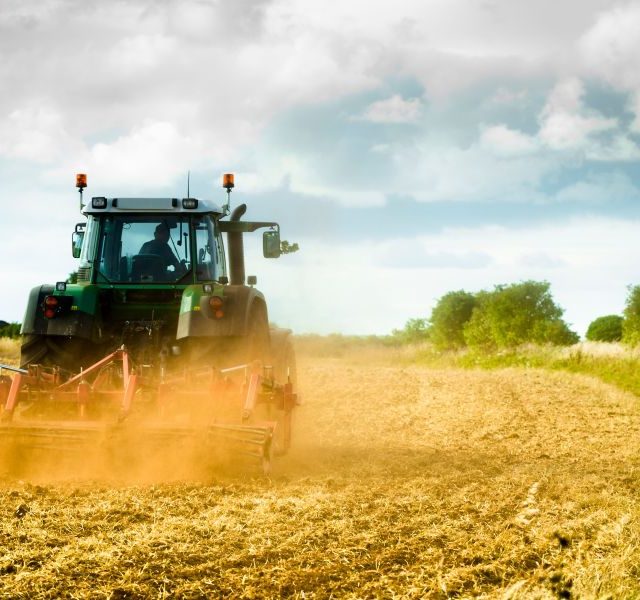
With the majority of land in England currently used for agriculture, it is inevitable that there is a strong focus on the implications of land use change for food production.
The framework offers a long-term commitment to maintain levels of domestic food production by producing “food more sustainably from less land”.
The Best and Most Versatile (BMV) farmland will largely be safeguarded from permanent land use change, supported by an update of Agricultural Land Classification data and mapping.
It says the area of land that might need to come out of food production to make space for nature recovery and development can be minimised if sustainable farming practices become more integrated.
For example, it highlights that solar generation should be designed to enable the continued grazing of animals underneath and where land remains primarily for food production there should be greater use of arable field margins or hedgerows.
By 2050, the vision is to “produce more of what we consume, partly because more of our land will be efficiently growing the high value food that people recognise on their plates, rather than ingredients for processed and unhealthy food or animal feed, and farmers will see more of this value.”
Opportunities for farmers and land managers
The framework proposes a major rewiring and reorganisation of how land use is planned, delivered and monitored.
For anyone looking to grow a rural business, it will be important to understand what plans and principles will apply and how the new framework of organisations will operate.
The Government has said that by 2030 farmers will be able to access information that will help them to consider where their land fits in a national spectrum of potential land uses.
This should make it easier for them to see the full range of benefits they could be paid to deliver.
There is an expectation that many farm businesses will be stacking multiple income streams on top of food production.
To improve both productivity and profitability, the Government has also committed to producing formal sector plans, beginning with horticulture and poultry.
The hope is that these plans – alongside the forthcoming Farming Roadmap – provide more detail on how food production can increase in line with historic averages.
Possible risks?
Many elements of the framework have been welcomed, but there are some aspects with the potential to generate concern.
For example, while most people will welcome increasing the availability of data to help link national, regional and local plans, some will be concerned about the intention to make who owns what land and who receives public funding for various actions more transparent.
Parts of the document appear to have been inspired by the land reform programme in Scotland, which includes much more transparency on land transactions and whether they are likely to be in the national interest.
As well as an emphasis on a greater ability for communities to see what is happening in their area, their ability to buy land of community value is also mentioned more than once. This appears to be encouraging greater use by communities of existing rights which, again, will concern some landowners.
Despite this, the Land Use Framework is broadly a welcome sight, endeavouring to bring together the strands of policy across land use that have historically been siloed.
Along with the imminent reopening of SFI, the creation of the Farming and Food Partnership Board, and the upcoming 25-year Farming Roadmap, there are signs that the Government is taking seriously the need for long-term investment and planning in British farming.