Land Business Update | Week Commencing 9 March 2026
Farming & food
Farm profit forecasts highlight pressure on crop growing farms (England)
Cereals, general cropping and mixed farms are all expected to have generated lower average profits in 2025/26 than the average over the three years from 2022/23 to 2024/25. This is due to lower commodity prices and reductions in Basic Payment subsidies. The figures are for Farm Business Income, which is Defra’s preferred measure of profitability and includes profits from agriculture, agri-environment schemes, diversification and Basic Payments. The profits of grazing livestock farms, in the lowlands and uplands, have increased. Dairy farming profits remain the highest, due to increased volumes of milk produced, but are likely to come under more pressure in 2026/27 due to cuts in prices in milk contracts due to oversupply. Please contact Natalie Gaibani, our head of farming, if you would like to discuss farm profits. NB This data is based on the Farm Business Survey, which excludes farms with a Standard Output of under £21,000, so smaller farms, which account for ~ 2% of output. It is also an average across all levels of farm performance. The bottom 25% of performers consistently make losses and the top 25% are consistently profitable. It is the middle 50% of most farm types where the greatest pressure is.
| £/ha Farm Business Income Current prices | 2022/23-2024/25 three-year average | 2025/26 forecast | 2025/26 forecast as % of 2022-2024 three-year average |
| Cereals | £78,200 | £17,000 | 22% |
| General cropping | £109,500 | £54,000 | 49% |
| Mixed | £49,300 | £40,000 | 81% |
| Dairy | £151,800 | £224,000 | 148% |
| Grazing livestock (Lowland) | £28,000 | £45,000 | 161% |
| Grazing livestock (LFA) | £30,200 | £37,000 | 123% |
| Specialist pigs | £111,300 | £75,000 | 67% |
Small Producers Capital Grant Fund (Scotland)
The funding for this grant will be tripled to £1.5m due to strong demand. The grant was launched this year with funding targeted towards projects which will achieve one or more of a range of outcomes, including increasing innovation and productivity, sustainable local food and drink production, improving collaboration, increasing energy efficiency and strengthening supply chains. It is open to small producers across Scotland (with fewer than 10 employees, turnover under £2m) and farms of 30 hectares or less.
Natural capital & environment
Forestry Grant Scheme claim window extended (Scotland)
In the first weeks of 2026, much of upland Scotland was covered by snow. Recognising that the severe weather conditions resulted in significant restrictions being placed on planting and ground preparations during that time, Scottish Forestry have extended their end of claim year deadline by six weeks to 15 May 2026, allowing applicants to complete FGS projects and do the required administration to submit their claims for 2025 funding. NB Scottish Forestry has said that it is unable to accept part claims, saying that it cannot process a claim until all previous claims for that contract have been progressed through to completion. This is the third year the claim period has been extended.
Robust oak health evaluation system launching (UK)
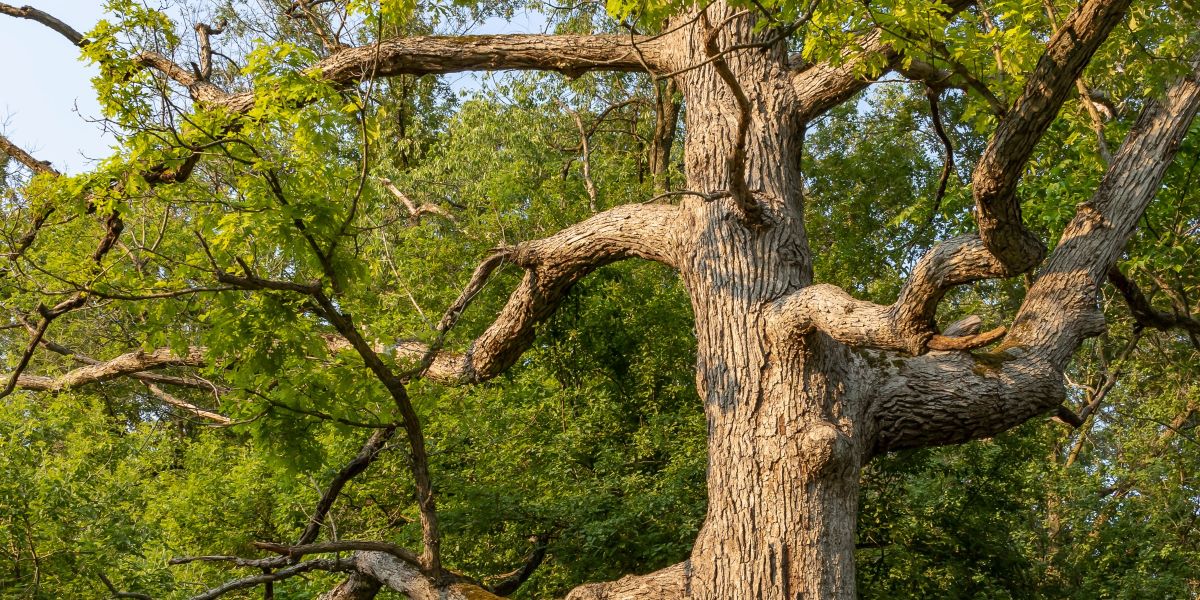
The app has been designed to support real-world woodland management decision making on the health of oak trees. It has been developed as part of the Forest Lab project by Forest Research, Aberystwyth University and the Sylva Foundation. The launch of the new app is being supported by a webinar which will focus on current knowledge on Acute Oak Decline and other threats to oaks. The webinar is at 10.00 on 24 March 2026.
Climate Change Committee on cost of net zero compared with fossil fuel business-as-usual (UK)
The Committee’s latest report, issued to supplement its advice to the government on the seventh carbon budget for 2038 to 2042, says that the cost of reaching net zero is ~ £4bn a year, or close to £100bn by 2050. This is roughly equivalent to the energy-related costs of the fossil fuel shocks that followed Russia’s invasion of Ukraine. The costs of the current Iran war are currently unknown. The £4bn a year figure is significantly less than the figures quoted by some, including the Reform party, whose calculations do not include the cost of the fossil fuels needed if net zero is not reached. The policy director at the Grantham Institute at the London School of Economics, who should be an objective commentator, said that there would be substantial and long-lasting savings for the UK if it speeds up the transition to an economy that is largely electrified and powered by clean domestic energy.
Clean water now campaign launched (UK)
The new campaign has been launched by more than 40 organisations which represent over nine million supporters. It calls on the government to use the Water Reform Bill to:
- Stop pollution, by enforcing laws on sewage in water, restrict intensive agriculture and ban toxic chemical pollution.
- Fix the water system, by stopping water companies putting profit before people and nature, with a tough new regulator.
- Restore nature, by creating new habitats along rivers and coastlines, and by increasing natural resilience to climate change.
The campaign has published a report on the state of the nation’s water and the rationale for the changes it proposes.
Red streetlights tested in Denmark to reduce impacts on bats (Global)
The lights were installed near a known bat colony to mitigate the impact of artificial light on the nocturnal ecosystem, as the bats rely on specific dark corridors for navigating between their roosting sites and their feeding grounds. Traditional white streetlighting can create ‘light barriers’ that the bats are often unwilling to cross, effectively shrinking their available habitat. The red spectrum remains largely invisible or non-disruptive to bats. A lighting designer who worked on the project said that they hoped that everyone welcomed the new lighting and that the red light not only has functional value, but also symbolic value, making passers-by aware that it is a special natural area to protect.
Rural economy & property
New gigabit address checker launched (UK)
Anyone in England and Wales can find out if the broadband where they live is going to be upgraded through a government-backed project with this new checker. The UK government claims that Project Gigabit is now providing access to a gigabit-capable connection to over 750 premises per day in the UK, which is the fastest rate since the programme launched in 2021. The target remains to achieve 99% gigabit coverage by 2032. For any places that are not covered by current rollout plans, the checker will redirect them to Ofcom to see which broadband suppliers are active in their area. They can then contact them to register their interest in an upgrade, which will demonstrate demand in their area and may encourage the provider to decide to expand their rollout.
Spring statement – government urged to slow the increase in wages of workers under 20 to match older workers’ (UK)
A number of industry representative bodies have requested the government to review its pledge that under 20s would be paid the same as older workers by the next election, due to continuing inflationary and economic pressures, some driven by wage growth. It is unclear whether the government will do it.
Warm and wet spring now expected after wet winter tops up water levels to normal levels 
All areas of England had above average rainfall in February, and soils remain very wet across most of the country. This has helped increase river flows and groundwater levels, which are now normal or higher for this time of the year. March to May is expected to be warm, rather than cool, and more likely to be wet than dry.
Local councils remain under financial pressure 
The Local Government Information Unit’s annual report on the state of local government finance has found, perhaps unsurprisingly, that confidence in the sustainability of council finances remains low and that almost 40% of them expect to have to ask for Exceptional Financial Support within the next five years. Over 90% of councils intend to increase council tax, almost 60% expect to cut service spending and 56% plan to draw down reserves. The Rural Services Network says that while recent reforms, including multi-year settlements and the Special Educational Need deficit intervention, have provided some stability, they do not fundamentally increase the overall level of funding in the system. The LGIU argues that more radical reform, including changes to local taxation and greater fiscal devolution, will be required to secure long-term sustainability.